
Photography Guide
Korean Food Photography Guide
Timing the Korean BBQ charring shot for peak grill marks while managing smoke density, and composing a banchan spread with six or more small dishes in a visually balanced overhead frame.
Primary Angle
Overhead
Lighting
Overhead natural light for banchan spreads; side-backlighting for BBQ smoke effect; warm light for char color
Read time
~8 min
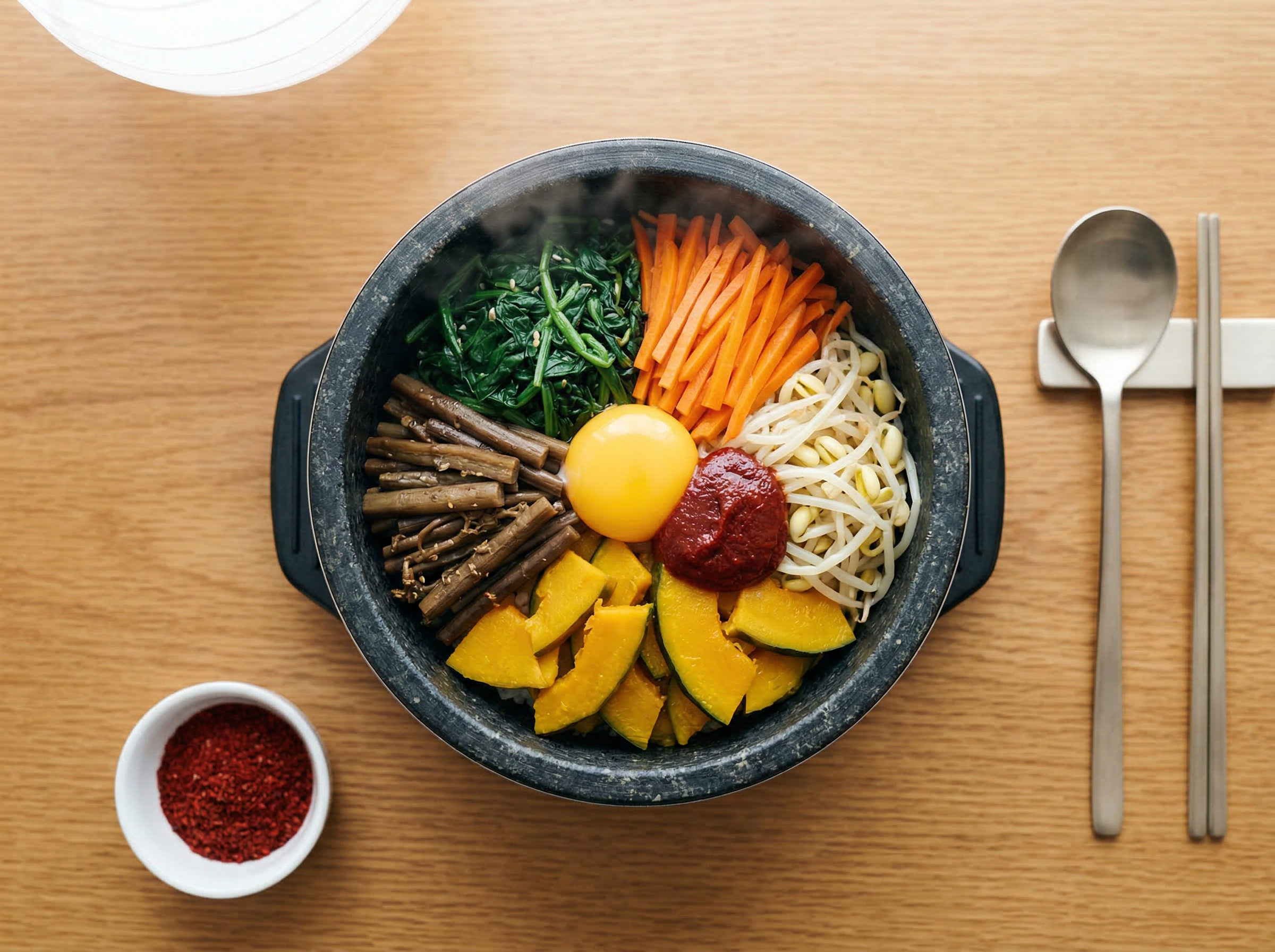
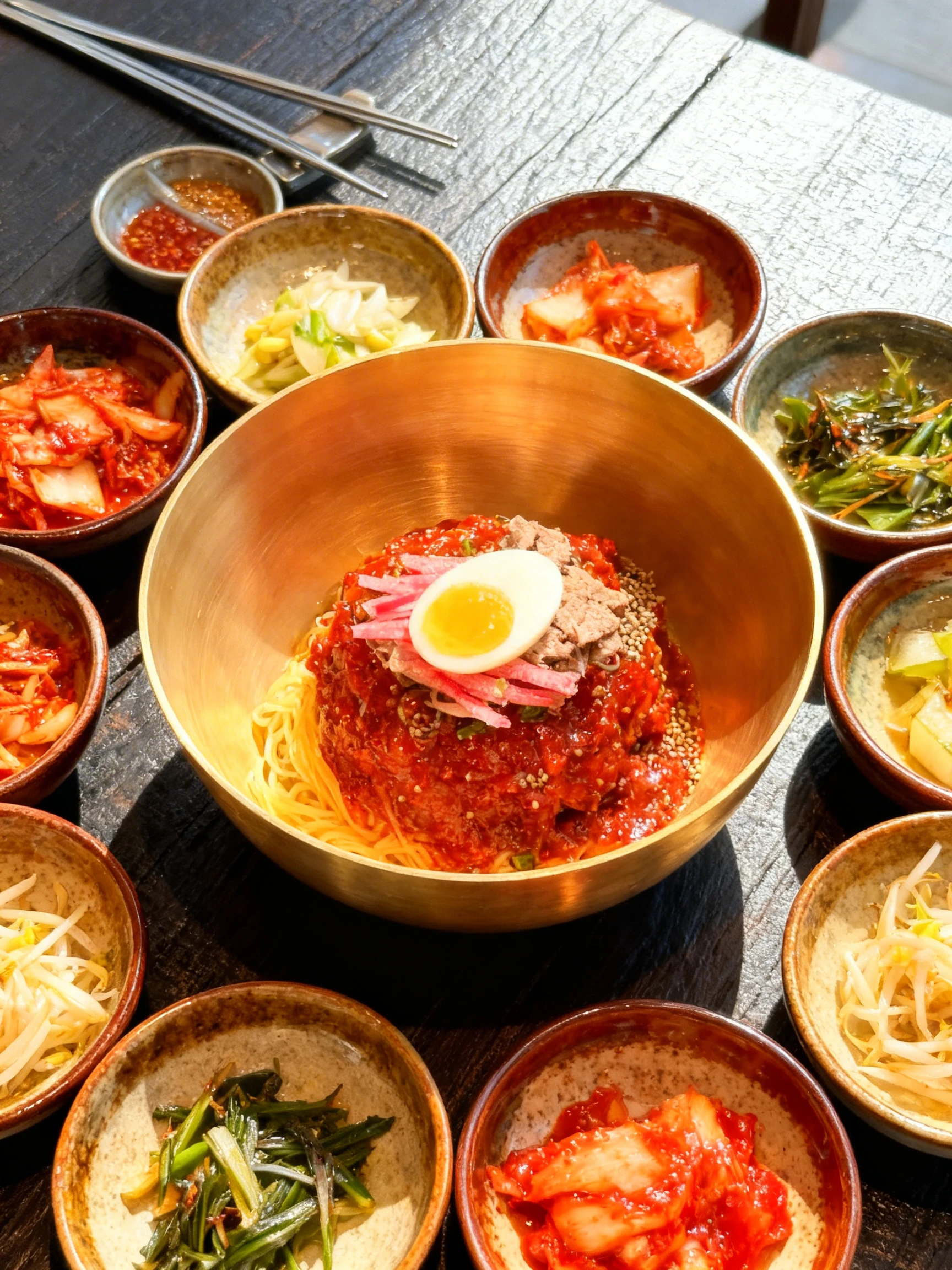
Korean food photography operates in two distinct visual registers. The first is the intimate, organized abundance of a banchan spread - six to ten small dishes of kimchi, namul, jeon, and pickles arranged around a central dolsot bowl or rice bowl, photographed overhead in a way that communicates both individual dish identity and collective generosity. The second is the drama of a Korean BBQ tabletop - galbi and bulgogi over a live charcoal or gas grill, with smoke rising and meat caramelizing at high heat, captured in a shot that communicates the heat and the experience of cooking at the table. Between these poles lie bibimbap in a stone bowl, tteokbokki in a bright red sauce, crispy Korean fried chicken, and japchae glass noodles - each with its own distinct photographic requirements. This guide covers the specific techniques for each major Korean dish category.
What Makes Korean Challenging to Photograph
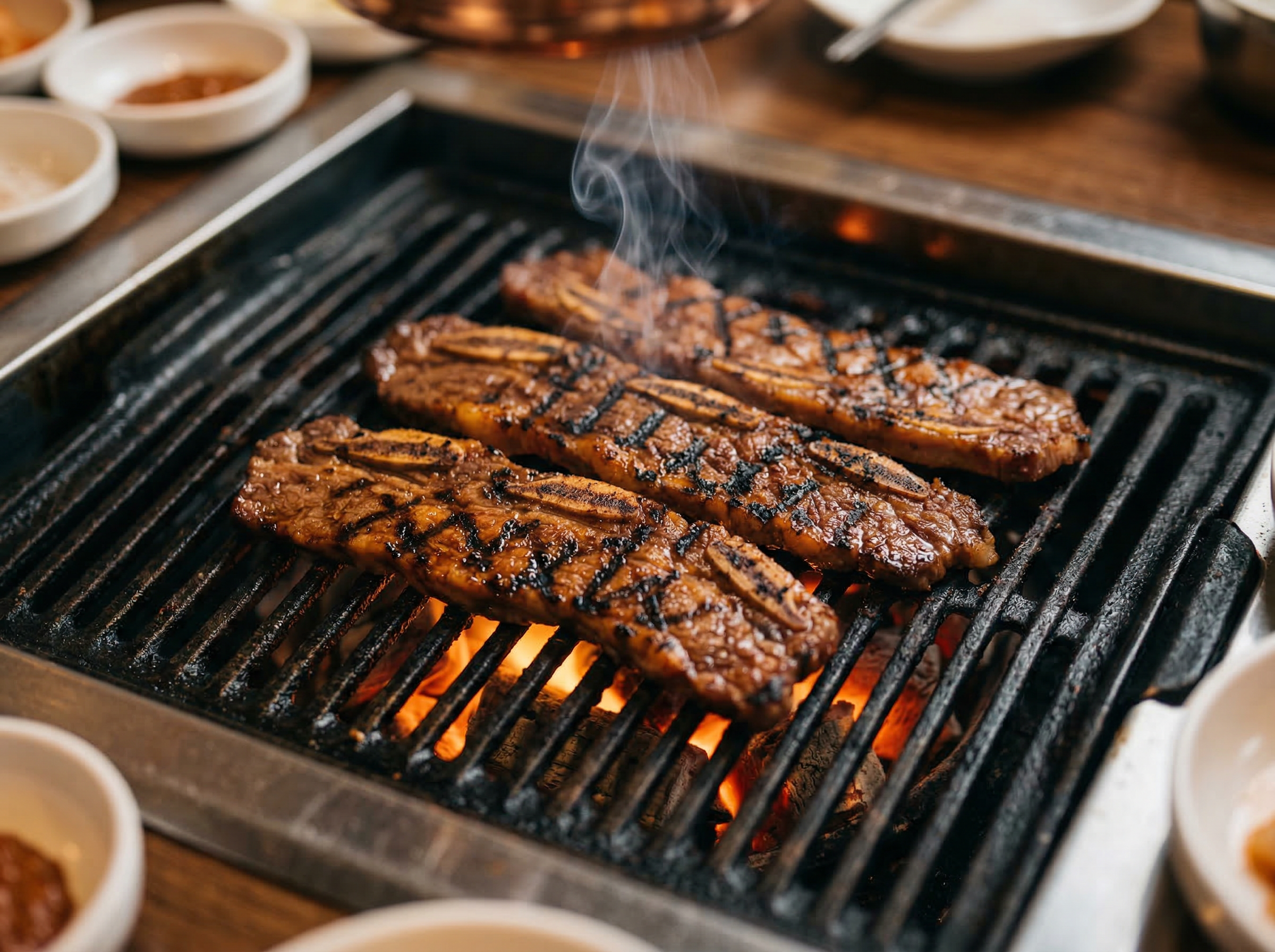
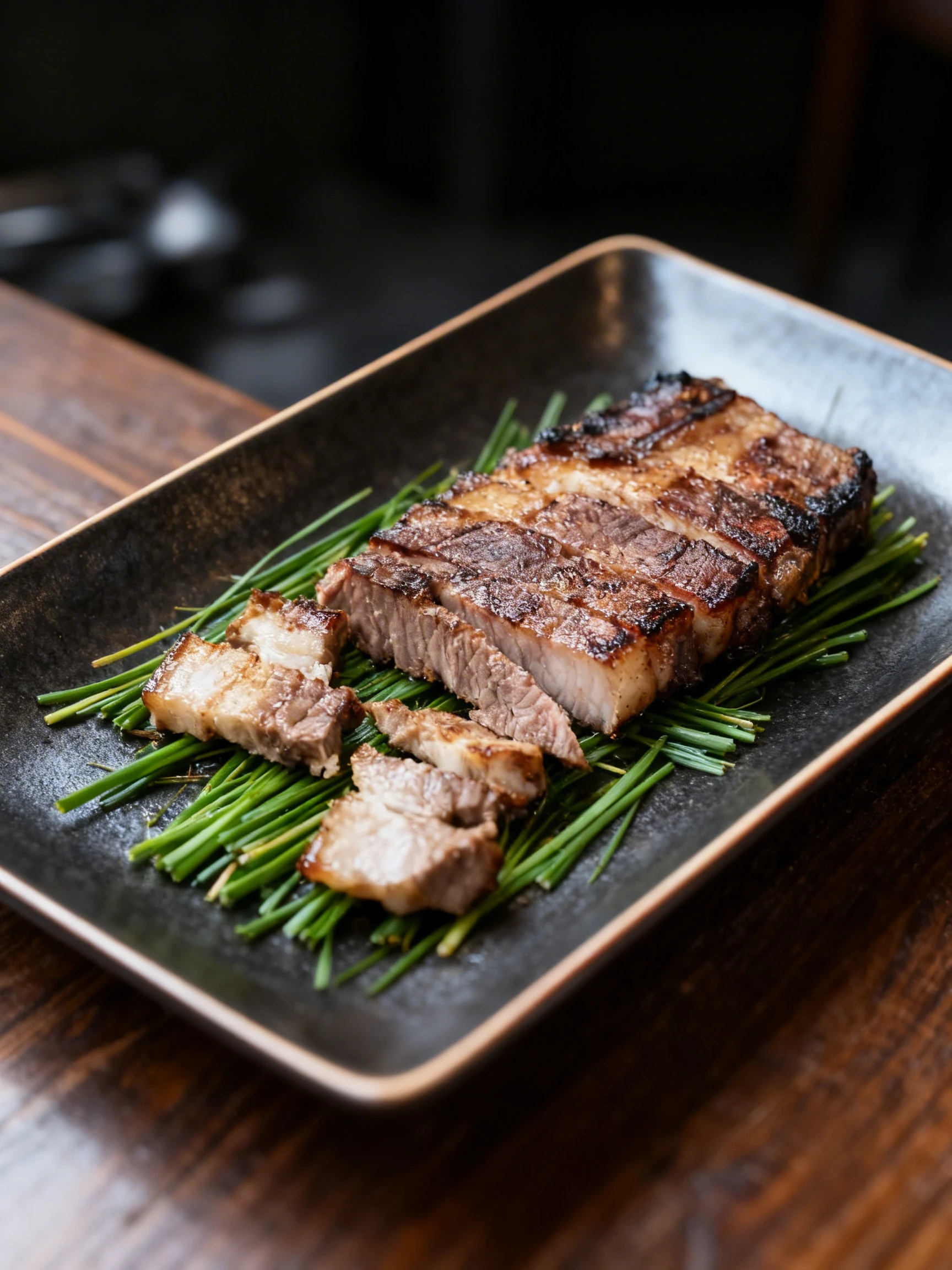
Korean BBQ tabletop photography is the most technically demanding scenario in Korean food photography because it requires managing three simultaneous variables at a live heat source: smoke density, charring timing, and reflective grill surface. Smoke is the atmospheric element that makes a BBQ photo look authentic and alive, but too much smoke obscures the meat and too little makes the grill look cold. The optimal smoke moment is when the first fat drips from marinated galbi short ribs hit the coals - a wisp of flavorful smoke rises for approximately ten to twenty seconds before either dissipating or thickening. Charring timing is similarly narrow: the distinctive crosshatch grill marks on bulgogi develop in the first two minutes, but the meat becomes too dark and loses its visual redness within four. The grill grate itself is a highly reflective metal surface that creates scattered hotspots under any directional light. Position the camera at 35 degrees above the table level to minimize direct grill reflection. For banchan, the challenge shifts to composition: arranging six to ten small ceramic dishes in an overhead frame that is both organized and natural-looking, with no single dish dominating and the stone bowl or main dish anchoring the center.
Best Lighting for Korean Photography
Korean food photography uses three distinct lighting setups depending on the dish. For banchan spreads photographed overhead, diffused natural light from a large window above and to the side is ideal - it illuminates all small dishes evenly, preserving the individual colors of each banchan (the deep red of kimchi, the pale yellow of bean sprouts, the green of seasoned spinach) without creating shadows that make some bowls look darker than others. For Korean BBQ at the table, side-backlighting is the key setup: position the window or softbox behind and to the side of the grill so that the smoke is backlit and reads as a visible white wisp rather than an invisible clear gas. This backlighting also creates a glowing rim around the edge of the meat pieces, which communicates heat and sizzle. For bibimbap in a dolsot stone bowl, overhead natural light works well for the pre-mix composition shot, while a slight side light from 20 degrees is better for the post-mix shot that shows the golden rice crust at the bowl bottom. For kimchi jjigae and tteokbokki, a warm side light enhances the red gochugaru base colors without shifting them to orange.
Camera Angles for Korean
Overhead is the primary angle for Korean food because so many of the most iconic Korean dishes are designed to be seen from above: a full banchan spread, bibimbap with its color-sorted vegetable arrangement, and tteokbokki in a sauce pan are all overhead-first subjects. For bibimbap, the overhead pre-mix shot is the classic - vegetables, egg yolk, and gochujang arranged in sections around the bowl center, showing the color composition before the guest mixes everything together. The post-mix shot, showing the golden rice crust, is better at 35 degrees slightly elevated so you can see both the mixed surface and the browned rice edge against the stone bowl wall. Korean BBQ is photographed at 35 degrees above the table surface - low enough to see the grill grate and the meat pieces clearly, but elevated enough to prevent the grill reflection from dominating the frame. Japchae glass noodles benefit from a 45-degree angle that shows the translucent noodle quality and the colorful vegetable strands within the dish. Korean fried chicken overhead or at a 30-degree angle shows the craggy, crispy coating that is the primary quality signal.
Food Styling and Props
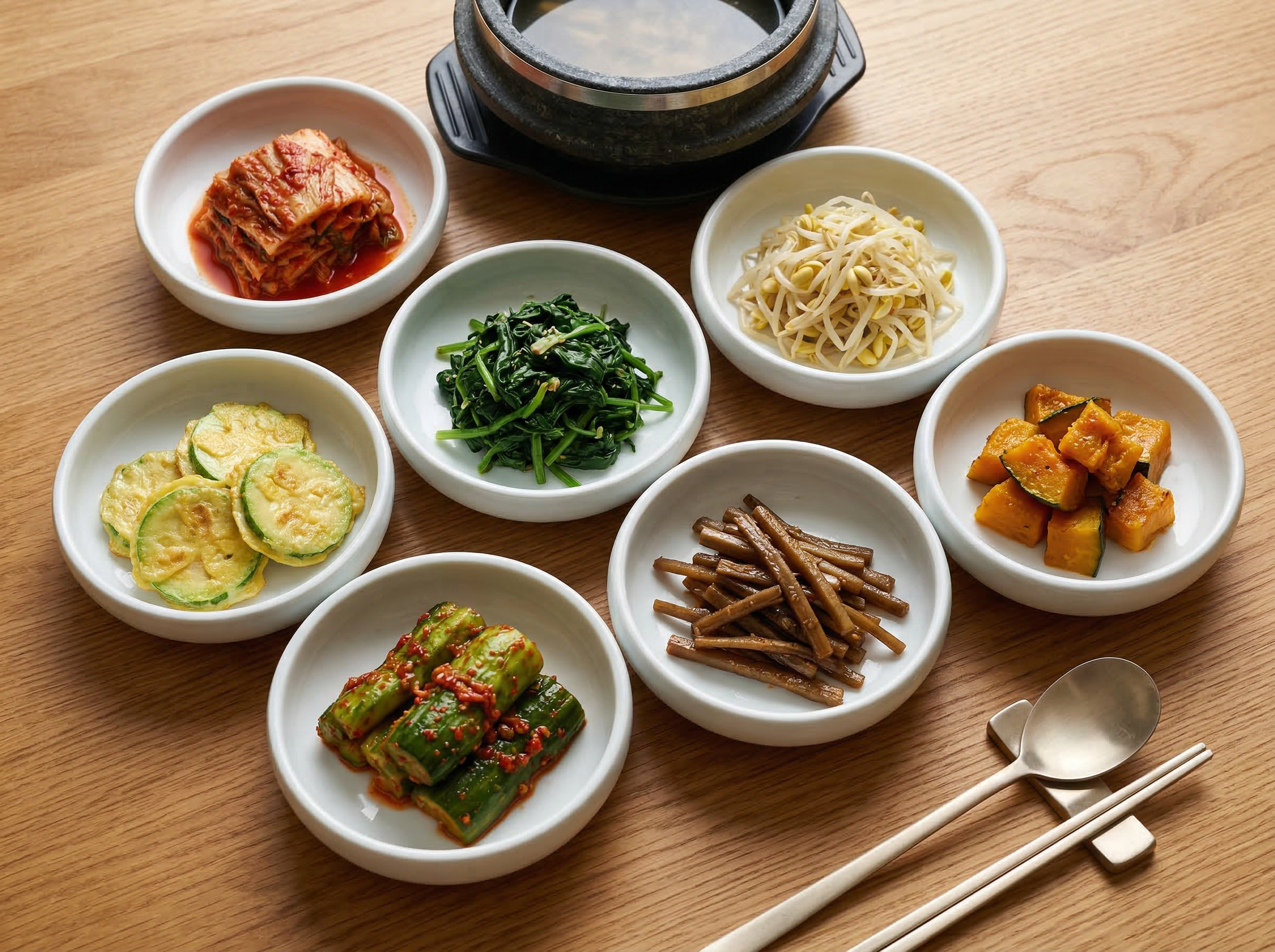
The Korean stone bowl, or dolsot, is the single most visually powerful prop in Korean food photography. Its dark grey-black stone surface creates strong contrast against the colorful ingredients of bibimbap, and the visible steam from the hot bowl surface signals freshness. For banchan arrangement, use an odd number of small ceramic dishes - five, seven, or nine - arranged in a balanced asymmetric pattern rather than a strict grid. Place the main dish or stone bowl at the upper center or center of the frame as the anchor and arrange banchan dishes at varying distances around it, with smaller dishes closer to the edges. A cast iron grill grate shown at the edge of the frame in a Korean BBQ shot adds authenticity and communicates the cooking method without needing a caption. Sesame oil in a small clear bottle reflects light attractively when positioned in the background slightly out of focus. A small bowl of gochugaru - the coarse Korean red pepper flakes - positioned as a foreground element tells the spice story and adds deep red color to a frame that might be dominated by brown meat tones. For Korean fried chicken, a sheet of parchment paper under the pieces and a small container of yangnyeom sauce beside them creates the fried chicken delivery box aesthetic that is native to the dish.
Recommended props
Equipment Guide
A 35mm prime lens is the most practical choice for Korean food photography because it accommodates both the wide overhead banchan spread and the tighter tabletop BBQ scenario without requiring a lens swap between setups. For a ten-dish banchan arrangement photographed at camera-arm height overhead, a 35mm covers the full spread without distortion at the edges. A 50mm prime is better for single-dish shots like bibimbap and tteokbokki where natural proportions and a moderately shallow depth of field are the goal. For Korean BBQ smoke and grill detail, a 50mm at f/4 is fast enough to freeze the smoke wisp at 1/250s while keeping the meat and grill in acceptable sharpness. A small tripod with a 90-degree overhead arm is useful for banchan shots; for BBQ tabletop shooting, handheld is more practical because the optimal shooting moment - the smoke wisp and charring peak - requires moving quickly around the table. A portable LED panel that can be held by an assistant behind the grill provides the backlighting for smoke without the complexity of a full studio setup.
Skip the photoshoot — enhance the korean photos you already have
The techniques on this page take time to master. MenuPhotoAI applies the same lighting, color, and texture corrections — automatically — to the smartphone photos you already shot. Studio-quality results in 30 seconds.
Try free — 5 credits, no cardCommon Korean Photography Mistakes
Missing the BBQ charring and smoke timing window
Korean BBQ photography has a two-minute charring window and a ten-to-twenty-second smoke window that rarely overlap perfectly. Pre-position the camera at 35 degrees before the meat goes on the grill and shoot continuously from the first smoke wisp through the peak char development. The hero frame is usually one where smoke is present but light, and grill marks are visible but the meat still shows interior redness.
Arranging banchan dishes in a rigid grid
A perfectly symmetrical grid arrangement of banchan dishes looks artificial - it communicates a staged set rather than a generous home-style Korean meal. Arrange dishes in an odd-numbered cluster with the anchor dish off-center and smaller dishes at varying distances. Allow slight overlapping of dish edges at the periphery. The goal is organized abundance, not mathematical symmetry.
Photographing bibimbap only after mixing
The post-mix bibimbap shot - everything combined into a unified brown-orange mass - loses the individual color identity that makes the dish visually compelling. Always shoot the pre-mix arrangement first: gochujang in the center, vegetables sorted by color in sections, egg yolk intact. This is the definitive bibimbap image. The post-mix shot showing the golden rice crust is a secondary frame that works better at a 35-degree angle.
Flat overhead light that kills banchan color separation
When all banchan dishes are lit from the same flat overhead direction with no directional component, similar-toned dishes like seasoned burdock root and dried squid become difficult to distinguish. A slight side component to the overhead light - placing the softbox at 70 degrees overhead rather than 90 - creates small shadows at the rim of each dish that visually separate them from each other and from the background.
Ignoring the grill reflection in BBQ photography
A cast iron or steel grill grate under direct overhead light creates a bright metallic reflection that competes with the meat for visual attention. Positioning the camera at 35 degrees above the table level, rather than straight overhead, moves the camera out of the primary reflection angle. Side-backlighting instead of overhead lighting further reduces grill glare while creating the atmospheric smoke backlighting that is essential for BBQ photography.
Editing Tips
Korean food editing requires managing red saturation carefully. Gochugaru, kimchi, tteokbokki sauce, and gochujang are all deep red elements that can clip to pure red in editing if vibrance or saturation is applied globally. In the HSL panel, reduce red saturation by 5 to 10 points and increase red luminance by the same amount - this preserves the rich red appearance while opening up detail in the deep shadow areas of kimchi and sauce. For bibimbap, increase green luminance to make spinach and cucumber namul bright and fresh-looking. For Korean BBQ, lift the shadow detail on the meat to show interior texture, and add a slight warm temperature shift to emphasize the caramelized char color. Dolsot stone bowl surfaces benefit from a clarity boost to show the stone texture that communicates heat retention.
Platform-Specific Tips
For DoorDash and Uber Eats, a single bibimbap overhead or a Korean fried chicken close-up at 30 degrees are the highest-performing Korean food thumbnails - they communicate the dish identity instantly at small sizes. A full banchan spread becomes difficult to read at thumbnail dimensions because the small dishes lose individual identity. For delivery platforms, lead with the main dish and use banchan as a supporting out-of-focus background element. For Instagram, the overhead bibimbap pre-mix with its color-sorted vegetable sections performs consistently well as a flat lay post, while a Korean BBQ smoke and sizzle video clip or Reels shot drives strong engagement. For print menus, the overhead banchan spread at high resolution works well as a section opener image, communicating the generosity of Korean dining culture. A dolsot bibimbap pre-mix shot with visible steam rising from the stone bowl edge is a print hero image that communicates both quality and freshness. MenuPhotoAI can enhance smartphone shots of banchan spreads and bibimbap - correcting the red channel clip in kimchi photos and sharpening the individual namul dish textures - making it practical to photograph your full Korean menu without a dedicated studio setup.
Korean Photo Examples
Real korean photos from restaurants using MenuPhotoAI, enhanced by AI in under 30 seconds.
Kimchi
13 examples
Bibimbap
2 examples
Korean Food
18 examples
Take your Korean photos further with AI
Once you have a solid shot using the techniques above, MenuPhotoAI can handle the finishing work. Our AI removes distracting backgrounds, corrects exposure and white balance, and applies cuisine-appropriate color grading — turning a good smartphone photo into something you'd be proud to put on your menu or delivery app listing. Start with 5 free photos, no credit card required.
Frequently Asked Questions
Skip the photoshoot — enhance the korean photos you already have
The techniques on this page take time to master. MenuPhotoAI applies the same lighting, color, and texture corrections — automatically — to the smartphone photos you already shot. Studio-quality results in 30 seconds.
Try free — 5 credits, no cardMore Cuisine Photography Guides
This guide reflects best practices for Korean food photography as of 2026. Techniques may vary based on specific dishes, equipment, and shooting conditions. MenuPhotoAI is an AI food photo enhancement platform.